BLOG – Effects Of Artificial Light
I have optimised this content for the following Lighting designer Ireland and Outdoor lighting, this includes meta-data/excerpt.
URLS:
The below urls are not live however if we created pages using our keywords they would link as below;
www.designme.ie/outdoorlighting and www.designme.ie/lightingdesignireland
The Impact of Lighting on the Environment
The widespread introduction of LED technology in outdoor lighting, particularly sources with significant emission in the blue portion of the spectrum, has raised concerns regarding impacts on plants, insects, wildlife, and human health. Blue light emissions around 450 nm coincide with peak sensitivity in many species. These issues are increasingly relevant for professionals working as a lighting designer Ireland, where environmental responsibility and ecological awareness now play a central role in lighting design decisions.
Artificial outdoor lighting alters natural biological cycles across both plant and animal systems. Trees exposed to street and amenity lighting show measurable changes in phenology. Research indicates that bud burst may occur up to a week earlier in illuminated areas, while leaf fall can be delayed by up to three weeks and extended in duration compared with trees in darker locations (ffrench-Constant et al. 2016; Škvareninová et al. 2017). These changes can place stress on trees and increase vulnerability to storm damage. With increasingly unpredictable spring and autumn weather, prolonged leaf retention increases wind resistance, raising the risk of branch failure and associated hazards to infrastructure and public safety. Such impacts highlight the importance of carefully considered outdoor lighting design by any lighting designer Ireland involved in streetscape or public realm projects.
Concerns regarding insect population decline have grown in recent decades, with the most robust long-term data available for moths and butterflies (Lepidoptera), indicating a global decline of approximately 35% over the past 40 years. Outdoor lighting is considered a contributing factor, as attraction to artificial light can disorient insects, leading to exhaustion and increased mortality. Lighting has also been implicated in the decline of UK moth populations and may influence evolutionary processes by altering selective pressures (Grubisic et al. 2018; Fox 2013; Altermatt and Ebert 2016). For a lighting designer Ireland, spectrum selection and light intensity are therefore ecological considerations as well as aesthetic ones.
The aggregation of insects around outdoor lighting can increase predation by opportunistic predators, including certain bat species. While some species may benefit locally, the overall effect is a reduction in biodiversity. Light-averse bats are also affected, as illuminated features such as roads, hedgerows, or river corridors can act as “light barriers,” restricting movement between roosts and feeding areas (Stone, Harris and Jones 2015). These findings demonstrate how poorly planned outdoor lighting can fragment habitats, reinforcing the need for sensitive spatial planning by a lighting designer Ireland.
Research shows that LED outdoor lighting is generally less attractive to insects than older lighting technologies with similar correlated colour temperatures (CCT). However, lower-CCT, warmer-spectrum LEDs with reduced blue light content are significantly less attractive than higher-CCT alternatives (Longcore 2018). Consequently, warmer-spectrum, lower-intensity outdoor lighting is widely recognised as an effective mitigation measure for both insect and bat impacts (Stone, Harris and Jones 2015) and represents best practice for sustainable lighting design in Ireland.
Artificial outdoor lighting also affects aquatic ecosystems. A well-documented example, particularly relevant to Ireland, is the impact of light intensity and colour on juvenile Atlantic salmon, a species already in decline. Light levels as low as 0.2 lux can act as a behavioural barrier to salmon movement, while intensities of 1 lux or higher have been shown to disrupt smolt migration, reduce smolt mass, and increase susceptibility to sea lice infestation (Riley 2016; Stien et al. 2014). Given the proximity of many Irish waterways to bridges, promenades, and coastal roads, these considerations are especially relevant for any lighting designer Ireland working near water.
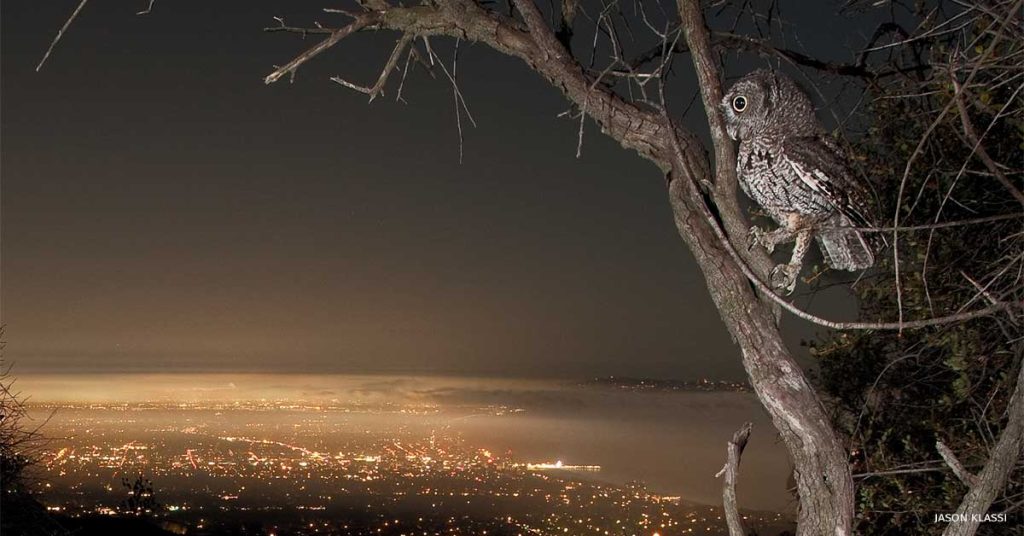
Bird species are also affected by outdoor lighting. Artificial illumination has been shown to alter the timing of dawn song, with robins observed singing up to two hours earlier than normal. Additional effects include altered mating behaviour, suppression of sexual maturity in blackbirds, and disruption to migratory species (Da Silva et al. 2015; Watson et al. 2016). Observations in Dublin have documented sparrowhawks hunting at night under artificial outdoor lighting, supporting wider evidence that light pollution is influencing wildlife behaviour in urban environments.